
The Challenge
How simple, complicated, intuitive, or confusing is the self-check-in? As an (almost complete) self-service hotel chain, Ruby Hotels has limited opportunities to receive feedback on the self-check-in process. Quantitative data, such as the average time required for check-in, is collected, but this only provides limited insight into the process. A longer check-in time does not automatically mean that the check-in is not accepted or does not perform well in terms of the Customer Satisfaction Score (CSAT), as many factors can cause guests to take longer to check in.
To collect qualitative data, PollHero set up a simple satisfaction survey to measure CSAT.
Questions & Results
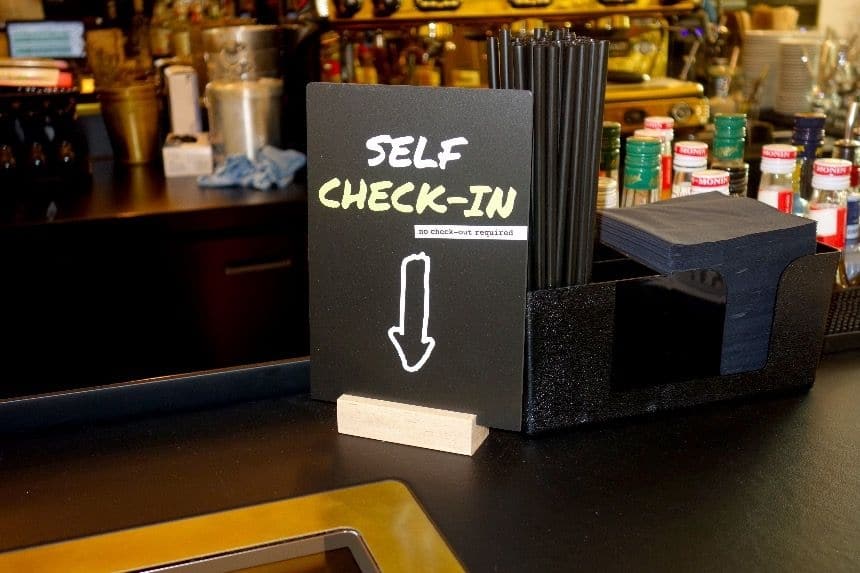
How does the check-in process work?
Before arrival, guests receive an email requesting them to complete the pre-arrival flow—this step is optional and can also be completed upon arrival at the hotel, but saves time at the check-in kiosk.
In the pre-arrival flow or the first step of check-in, the data is verified: name or reservation number, number of guests and booked rooms. This information is collected via custom user attributes.
Afterward, guests have access to additional options such as a Green Option (room cleaning only after 3 nights, with a complimentary drink in return). Finally, the keycard must be authenticated, after which the check-in process is complete and guests are shown a thank-you page. Ruby Hotels already tracks how long check-in takes per hotel, but not how satisfied guests are with the self-check-in.
This is where PollHero comes in.
The Satisfaction Check
On the thank-you page, a simple 5-level emoji question is displayed in the Ruby Hotels design:
How satisfied were you with the self-check-in?
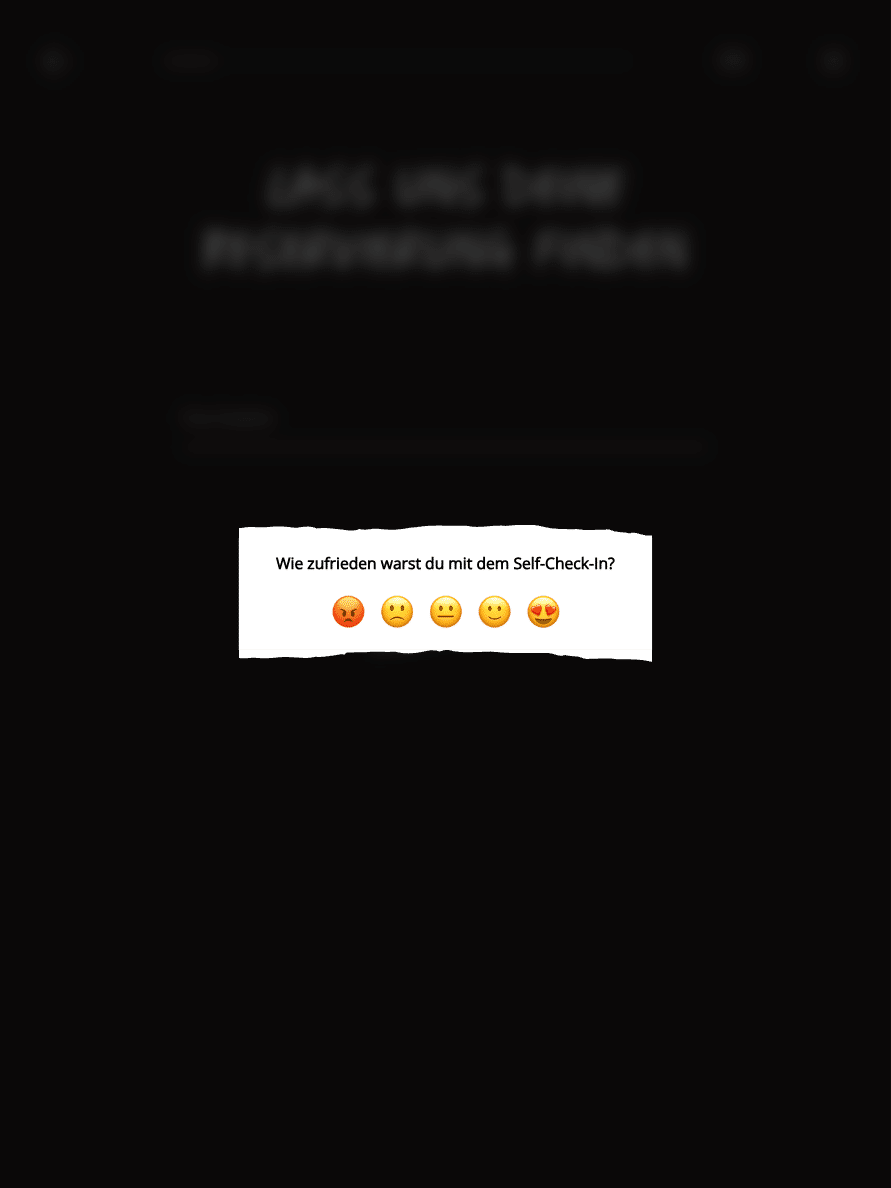
The survey was created using the PollHero Custom CSS feature, as the iconic Ruby Hotels design was essential. This ensures there is no visual break in the customer or guest experience, and guests continue to know that this is a Ruby Hotels survey.
The survey is displayed based on the language guests previously selected: German, English, Dutch, Italian, French.
Naturally, German surveys can be displayed in Italian hotels or French surveys in English hotels.
The Result
89.1 percent of all guests click an emoji and let Ruby Hotels know how they experienced the check-in process. A fantastic response rate!
The results are collected per hotel, so the satisfaction rate can be broken down and compared by hotel, city, and country.
Additionally, satisfaction can be determined independently of the hotel based on the number of guests and rooms. Are guests with a high number of people less satisfied, and does their self-check-in take significantly longer? Then the process should be streamlined. Or does the number of people not affect satisfaction?
Furthermore, satisfaction can be tracked over time. Is there a sudden drop in satisfaction? Perhaps it’s carnival season in Cologne or Oktoberfest in Munich, which is why check-in takes longer and leaves guests less satisfied. The time comparison helps Ruby Hotels better understand and identify outliers as such.
The Outlook
Ruby Hotels will be changing their self-check-in process in the near future. The satisfaction survey will remain an integral component. In addition to the quantitative data, the emoji time comparison will also help assess the quality of the new process. Are guests still satisfied since the implementation of the new process? Or has the Customer Satisfaction Score (CSAT) declined since then?
However, the satisfaction survey offers even more potential: using custom user attributes, the email address, phone number, number of guests, and other information could be clearly assigned to a survey response to ask targeted follow-up questions. Either directly with PollHero logic or via email. If a guest indicates they were particularly dissatisfied, they could be asked directly in the next step what problems occurred, or an email or WhatsApp message with follow-up questions could be sent.
But this step is still a future prospect.